

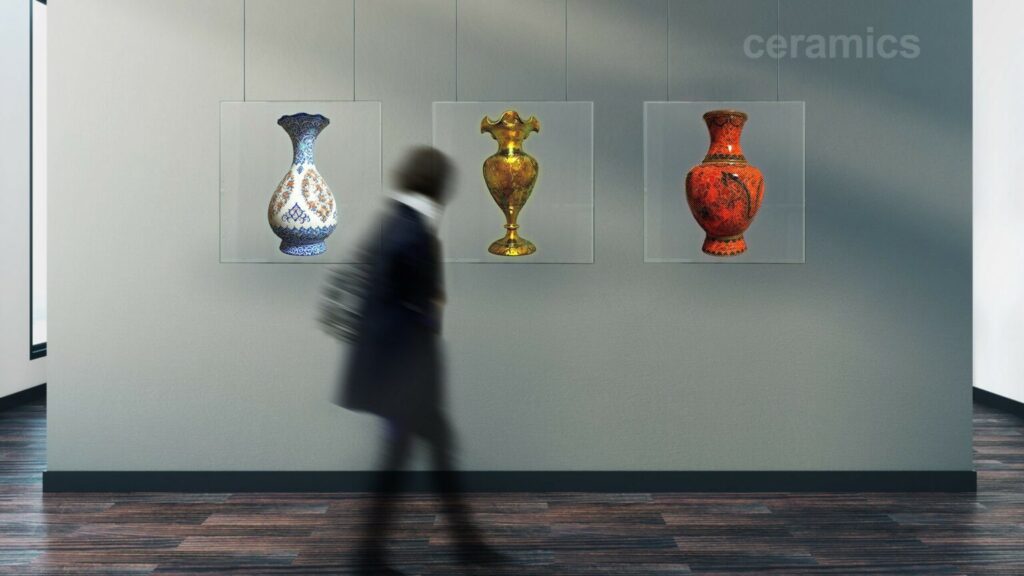
3D holograms are not only advertising. Only a small percentage of the Louvre's permanent collection is shown to visitors. The vast majority of museum treasures are stored in warehouses. Some of them may never be shown publicly. This happens not only in the Louvre, but in most museums around the world. Museum curators would like to show the world as much as possible. So what limits them?
There are two reasons why most artifacts remain hidden in warehouses. The first is limited space. Even in the world's largest museums there is not enough space to display all their collections. The second reason is the condition of the artifacts, which does not always make it possible to display them in museum rooms. Delicate objects and works of art that are susceptible to damage and are sensitive to external conditions are not exposed to protect them.
In order to present their exhibits to a wider audience, cultural and art institutions use solutions available thanks to new technologies. Interactive exhibitions, film screenings, photos and 3D models published on websites, online exhibitions and multimedia installations.
However, multimedia installations are very expensive. Film screenings and the presentation of photographs enclose spatial works in two dimensions, which has a huge impact on their reception. Although online exhibitions allow you to present a large part of the collections to the general public, they will not replace the experience of a personal visit to a gallery or museum. Ledholo offers a solution free from these limitations.